What is the example of superposition theorem?
Superposition theorem states that in any linear, bilateral network where more than one source is present, the response across any element in the circuit, is the sum of the responses obtained from each source considered separately while all other sources are replaced by their internal resistance.
What are the applications of superposition theorem?
The application of the superposition theorem is, we can employ only linear circuits as well as the circuit which has more supplies. Equivalent section currents and voltages algebraically included discovering what they will perform with every power supply in effect.
What is superposition theorem in simple words?
The superposition theorem states that a circuit with multiple voltage and current sources is equal to the sum of simplified circuits using just one of the sources.
How do you use the superposition theorem to solve a circuit?
To solve a circuit using superposition, the first step is to turn off or suppress all but one input.
- To suppress a voltage source, replace it with a short circuit.
- To suppress a current source, replace it with an open circuit.
What is a real life example of superposition?
Real life examples of the superposition principle include the pattern you get when shining light through two slits, the sounds you hear in acoustically well-designed rooms and music halls, the interference radios receive when moved near other electronic devices, and any tone produced by a musical instrument.
What is maximum power transfer theorem explain with example?
This theorem is always sought in a communication system. For instance, in a community address system, the circuit is attuned for the highest power transfer with making the speaker (load resistance) equivalent to the amplifier (source resistance). When the load and source have matched then it has equal resistance.
Can superposition theorem be applied to AC circuits?
Yes, the superposition theorem is applicable to AC circuits as well. The theorem is valid for any linear circuit. The best way to use superposition with AC circuits is to calculate the complex effective or peak value of the contribution of each source applied one at a time, and then to add the complex values.
What is compensation theorem?
Explanation of Compensation Theorem According to this theorem, any resistance in a network may be replaced by a voltage source that has zero internal resistance and a voltage equal to the voltage drop across the replace resistance due to the current which was flowing through it.
What is superposition theorem formula?
Superposition theorem states that in any linear, active, bilateral network having more than one source, the response across any element is the sum of the responses obtained from each source considered separately and all other sources are replaced by their internal resistance.
What is principle of superposition in physics class 12?
Class 12 Physics Electric Charges Fields. Superposition principle. Forces between multiple charges –Superposition principle. As per the principle of superposition, the force on any charge due to a number of other charges is the vector sum of all the forces on that charge due to other charges, taken one at a time.
What is superposition in quantum computing?
The principle of quantum superposition states simply that a quantum particle can exists in 2 distinct locations at the same time. According to this theory, an quantum particle can exist simultaneously in multiple states, unless the operation of measurement is made.
How do you use superposition in physics?
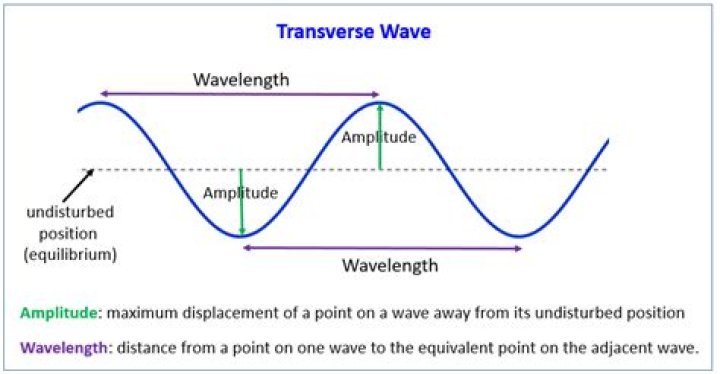
The principle of superposition says: When two or more waves cross at a point, the displacement at that point is equal to the sum of the displacements of the individual waves. The individual wave displacements may be positive or negative. If the displacements are vectors, then the sum is calculated by vector addition.
What is the best example of the superposition theorem?
The basic circuit diagram of the superposition theorem is shown below, and it is the best example of this theorem. By using this circuit, calculate the flow of current through the resistor R for the following circuit.
What is an example of superposition in circuit theory?
Example 1: Find I in the circuit shown in figure 1. Solution: Principle of Superposition is applied by taking 1V source only at first (figure2) [by current division formula] It may be observed that utilising the principle of Superposition, the net response can be obtained when both the sources (1A and 1V) are present.
How to find current through load resistor using superposition theorem?
To find the total current flows through the load resistor, perform algebraic sum of individual currents considering their direction of flow to the load resistor. Consider the given circuit and find the current through 2Ω resistor using superposition theorem. At first, find the current through 2Ω resistor with 48V source acting alone.
Can the superposition theorem be applied to power dissipation?
The requisite of linearity indicates that the Superposition Theorem is only applicable to determine voltage and current, but not power. Power dissipation is a nonlinear function that does not algebraically add to an accurate total when only one source is considered at a time. Can the superposition theorem be applied to non-linear circuits?